
Is Egypt Safe to Visit? Current Travel Safety Advice
Is Egypt safe to visit? For many travellers, yes. Millions of people visit Egypt each year, and most holidays on established routes through Cairo, Giza, Luxor, Aswan and the Red Sea resorts pass without serious problems. However, Egypt is not a destination where sensible preparation should be an afterthought.
The risks vary considerably by region. Traffic, aggressive selling, heat, stomach illness and petty theft are the issues most visitors are likely to encounter. Separately, some border areas, remote desert routes and parts of Sinai require much greater caution or should be avoided according to current government advice. Check guidance for your specific itinerary shortly before departure rather than relying on a general opinion about the country.
For more practical detail, see our Egypt Travel Guide for First-Time Visitors.
For more practical detail, see our The Best 7-Day Egypt Itinerary: Cairo, Luxor and Aswan.
For more practical detail, see our Cairo Travel Guide: Attractions, Areas and Practical Tips.
For more practical detail, see our Solo Travel in Egypt: Practical Advice and Planning Tips.
For more practical detail, see our Best Time to Visit Egypt: Weather, Crowds and Regional Advice.
Key takeaways
- Popular tourist destinations are visited safely by large numbers of travellers, but conditions and official advice can change.
- Avoid restricted border zones, unauthorised desert travel and any area your government advises against.
- Traffic is one of the most immediate everyday hazards. Use reputable transport, wear a seat belt and take care when crossing roads.
- Keep valuables discreet, agree prices before accepting services and use established guides and tour operators.
- Protect yourself from heat, dehydration and stomach illness, particularly during long sightseeing days.
- Arrange mobile data before arrival so you can use maps, translation, bookings and hotel contacts when you need them.
Table of Contents
- How safe is Egypt right now?
- Regional safety concerns and places to avoid
- Everyday safety in Egypt
- Solo, female and LGBTQ+ travel
- Health and environmental safety
- Hotels, attractions and excursions
- Connectivity and emergency preparation
- Planning a safer Egypt itinerary
- What to do if something goes wrong
- Frequently asked questions
How safe is Egypt right now?
There is no single safety answer that applies equally to Cairo, Luxor, Sharm El Sheikh, Dahab, Marsa Alam and every other part of the country. A resort holiday with organised boat trips is a different situation from an independent journey near a border or a self-drive expedition into the Western Desert.
Official travel advisories usually separate major visitor destinations from areas where travellers should exercise increased caution or avoid travel altogether. Read the latest advice issued by your own government before booking activities and again shortly before departure. Pay close attention to guidance for North Sinai, remote areas close to international borders and parts of the Western Desert. An excursion advertised online is not automatically authorised or suitable for current conditions.
Security checks at airports, hotels, museums and some roads are normal. Allow additional time for screening and checkpoints, follow instructions from security personnel and carry your passport or a secure copy in line with the advice given for your circumstances. Avoid photographing checkpoints, police, military personnel, government buildings, bridges or other sensitive infrastructure.
Regional safety concerns and places to avoid
Sinai and border areas
The main Red Sea resorts have a different risk profile from North Sinai and remote areas near international borders. Do not assume that a nearby resort makes every surrounding road or inland route appropriate for independent travel. Follow regional guidance, use established transfers and ask your hotel which excursions are currently operating through authorised providers.
Remote desert trips
Desert travel can be rewarding, but it is not suitable for improvised self-drive trips. A responsible operator should understand local permissions, carry enough fuel and water, use experienced drivers and have a clear communications plan. Share your route and expected return time with someone you trust. Mobile coverage may disappear outside settled areas, so a phone signal is not a substitute for proper logistics.
Demonstrations and political gatherings
Avoid demonstrations, political gatherings and large unexplained crowds, even when they appear calm. Do not photograph protests or security activity. If a crowd develops near you, leave without drawing attention, enter a staffed building and contact your accommodation once you are in a safe place.

Everyday safety in Egypt
Traffic and road crossings
Traffic is one of the most important practical hazards for visitors. Vehicles may move quickly, lanes can be used flexibly and pedestrians may not have priority in the way you expect. Cross at a controlled point where possible, watch the road rather than your phone and take extra care at busy junctions.
For reliable supporting context on this point, see Egypt Travel Advisory.
For airport transfers and longer journeys, choose a hotel-arranged car, reputable taxi app, established transfer company or recognised tour operator. Confirm the destination and price before leaving. On buses, trains and boats, keep your belongings with you and check any change to a booking at an official desk rather than accepting an unsolicited offer.
Petty theft and belongings
Keep your phone, wallet and passport secure in markets, stations, transport hubs and crowded attractions. A cross-body bag worn in front is usually more practical than an open backpack. Do not leave valuables visible in a vehicle or unattended on a beach, boat or café table.
Carry only the cash needed for the day, keep a backup payment method separately and store copies of important documents in a secure account. If your passport is lost, inform your accommodation and contact your embassy or consular service promptly.
Scams and unwanted assistance
Most people you meet will be welcoming, but tourist sites also attract persistent sellers and unofficial service providers. Someone may claim that an attraction is closed, offer to show you a “special” entrance, invite you to a shop or provide help you did not request before asking for payment. A brief, firm “no, thank you” is generally enough. Keep walking instead of debating.
Agree the total price and what is included before taking a taxi, hiring a camel or horse, booking a short boat ride or accepting a guide. Confirm whether entrance fees, transport and tips are included in an excursion. Carry small notes for legitimate minor services, but do not feel obliged to pay for unsolicited assistance.
Solo, female and LGBTQ+ travel
Many women travel independently in Egypt, although solo visitors may receive persistent attention in crowded tourist areas, markets and some transport settings. Clothing that covers the shoulders and knees is generally more comfortable and respectful away from beach resorts and hotel pools. Avoid isolated places after dark, use accommodation-arranged transport at night and tell someone when you expect to arrive.
If an interaction becomes uncomfortable, move into a hotel, museum, shop or other staffed venue and ask for help. Keep your accommodation address and emergency contacts available offline. Travelling with a companion can reduce unwanted attention, but it does not replace normal precautions.
LGBTQ+ travellers should research current legal and social conditions before departure and consider discretion with public displays of affection, dating apps and social media. Avoid sharing sensitive information with strangers. If you have specific concerns, seek advice from a trusted consular or specialist travel source before travelling.
Health and environmental safety
Heat can become exhausting quickly at temples, tombs and open archaeological sites. Carry sealed or treated drinking water, use sunscreen, wear a hat and schedule demanding sightseeing for the cooler part of the day where possible. Take regular breaks in shade. Dizziness, confusion, headache and unusual weakness are signs to stop, cool down and seek help.
If you want mobile data ready before you arrive, compare our eSIM Egypt plans and choose the plan that fits your trip.
Reduce the chance of stomach illness by washing your hands, choosing busy restaurants with good food turnover and being cautious with raw foods, unpeeled fruit and ice when you are unsure of the water source. Pack regular medication in its original packaging and bring enough for delays. Travel insurance should cover appropriate medical care and any activities you plan to undertake.
Red Sea swimming and diving are major highlights, but follow local instructions about currents, boat traffic, weather and marine life. Use established dive centres, stay within your ability and do not touch coral or wildlife. Dust, traffic fumes and heat can also affect people with asthma or other chronic conditions, so keep essential medication accessible.
Hotels, attractions and excursions
Choose accommodation with recent, credible reviews, clear reception arrangements and a reliable way to organise transfers. Save its address as a map pin and, if possible, in Arabic. Use the room safe for passports and spare cards, while keeping your phone and a small amount of cash with you.
At archaeological sites, follow barriers and staff instructions. Tombs, rocky paths, boats and uneven pavements create genuine fall risks, particularly when surfaces are dusty or poorly lit. Wear shoes with a secure grip and never enter a closed area because a guide or stranger suggests it.
For diving, desert travel, Nile cruises and long-distance excursions, use a recognised provider with clear booking details and current local knowledge. Ask about transport, entrance fees, insurance, weather cancellations and what happens if you need to return early. A low price is not useful if the operator cannot explain the itinerary or safety arrangements.
Connectivity and emergency preparation
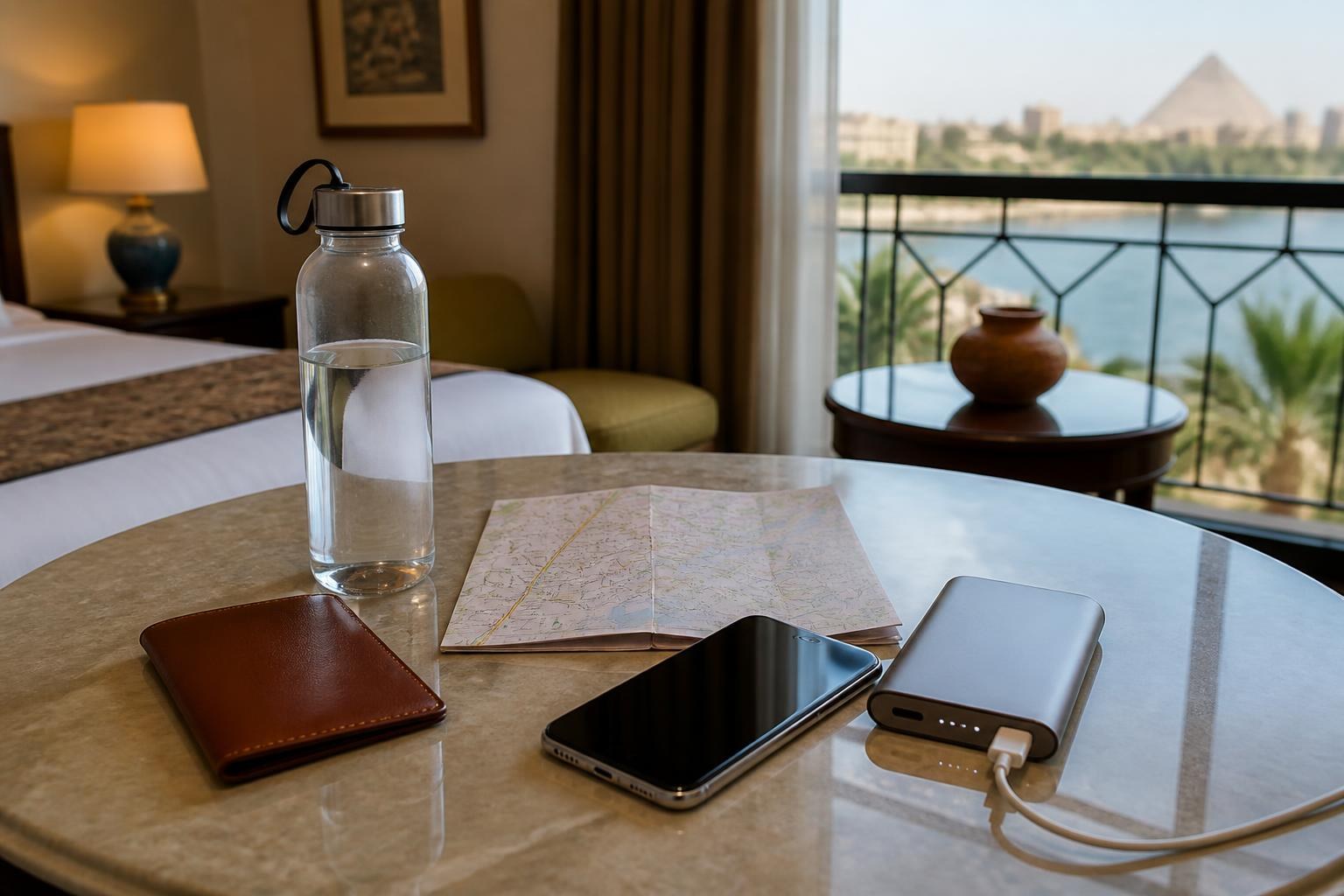
A working phone is a practical safety tool in Egypt. Mobile data helps with maps, translation, hotel addresses, ride bookings, location sharing and last-minute changes. Download offline maps and save key information before leaving Wi-Fi, especially if you plan to visit the desert, take a long transfer or arrive late at night.
For reliable supporting context on this point, see Egypt Travel Advice.
Check that your phone is unlocked and eSIM-compatible before departure. An Egypt eSIM can provide data as soon as you arrive, while a physical local SIM is another option for compatible devices. Keep your accommodation details, insurance information, passport copy and important contacts available offline. Carry a power bank and do not rely on a single device for all your travel information.
For an urgent problem, ask your hotel or guide to help you contact the appropriate local service. Emergency procedures can vary, so confirm current numbers through official travel advice or your accommodation. Your embassy or consulate can provide consular assistance, but it cannot replace travel insurance or local emergency services.
Planning a safer Egypt itinerary
- Check official advice. Review regional warnings, entry requirements and updates shortly before travelling.
- Choose manageable bases. Cairo and Giza, Luxor, Aswan and established Red Sea resorts have more transport and accommodation support than remote stops.
- Allow realistic travel time. Cairo traffic, security checks, delayed departures and hotel transfers can make a short journey take much longer than a map estimate.
- Use established operators. This is especially important for desert routes, diving, Nile travel, airport transfers and excursions away from major towns.
- Share your plan. Give a trusted person your accommodation list, transport details and expected check-in times.
- Keep flexibility. If local authorities, your guide or your accommodation advise against a route, change it rather than trying to continue.
- Protect your energy. Heat and poor sleep make small problems harder to manage. Schedule rest and avoid overloading every day with sights.
For a first visit, a route linking Cairo and Giza with Luxor, Aswan or a well-established Red Sea base is often easier to organise than a long chain of remote stops. Independent travel between major destinations is possible, but local support is valuable for complex transfers and activities outside cities.
What to do if something goes wrong
If you feel threatened, move towards a busy staffed place such as a hotel reception, museum entrance or established shop. Call your accommodation, guide or tour operator and ask them to help communicate locally. If property is stolen, report it to the police and request documentation for insurance. Cancel affected cards and secure your online accounts as soon as possible.
If you miss a connection or lose phone service, return to an official ticket desk, airport counter, hotel or transport office. Do not accept random offers to “fix” the problem. If separated from your group, go to the agreed meeting point and show the address of your accommodation in English and Arabic.
Stay calm, keep the situation visible and document what happened. Copies of bookings, receipts, identification and insurance details make it easier to deal with police, providers, insurers or consular staff.
Frequently asked questions
Is Egypt safe to visit for a first-time traveller?
Many first-time visitors travel safely by staying on established routes, using reputable transport and following current official advice. Egypt can feel intense because of traffic, crowds, heat and persistent selling, so realistic planning makes a significant difference.
Is Cairo safe for tourists?
Tourists visit Cairo and Giza every day, but the city requires extra care with traffic, crowded areas, valuables and unofficial services. Use trusted transfers, keep your phone secure and allow more time than a map estimate suggests.
Are Hurghada, Sharm El Sheikh and Marsa Alam safe?
These Red Sea destinations are major tourism centres, but safety still depends on the excursion and route. Use established dive and tour operators, follow sea-safety instructions and check current regional advice before travelling beyond the resort area.
Can I travel around Egypt independently?
Yes, independent travel is possible between well-connected cities. Remote desert trips, diving, long transfers and complex multi-stop itineraries are usually easier and safer with a reputable local operator and reliable transport.
Should I buy travel insurance for Egypt?
Yes. Choose cover that matches your activities and includes medical treatment, cancellations, baggage loss and relevant adventure or water activities. Read exclusions carefully and keep the policy details accessible offline.